
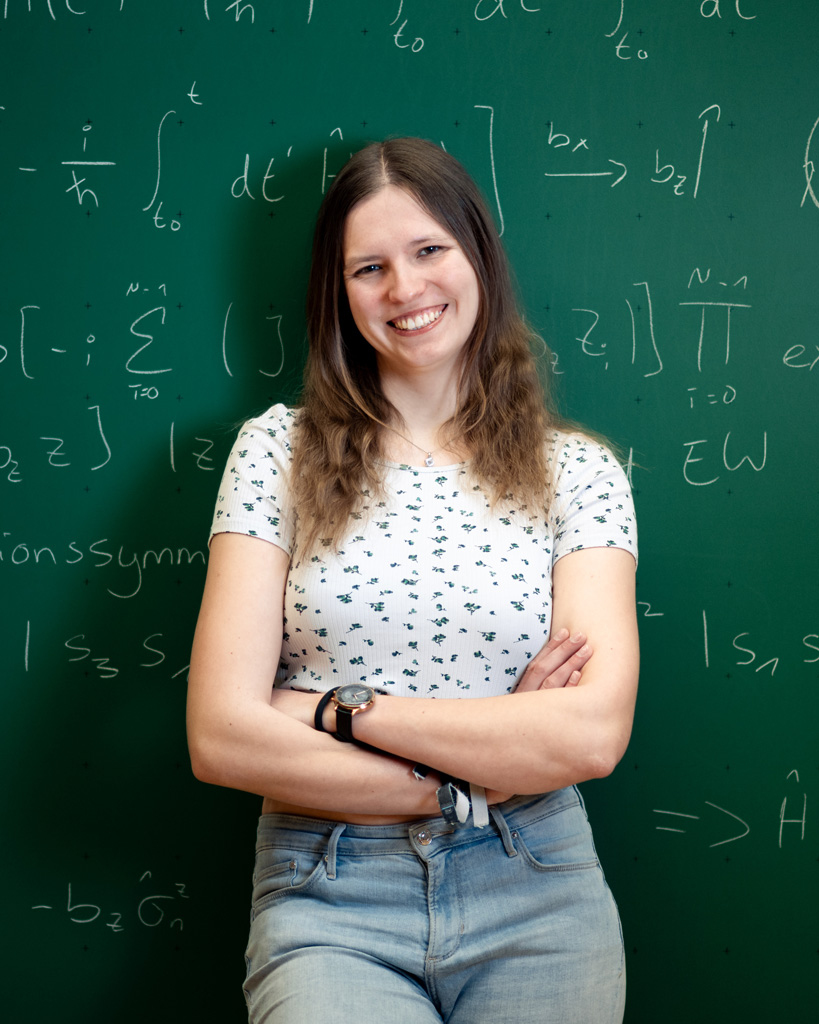
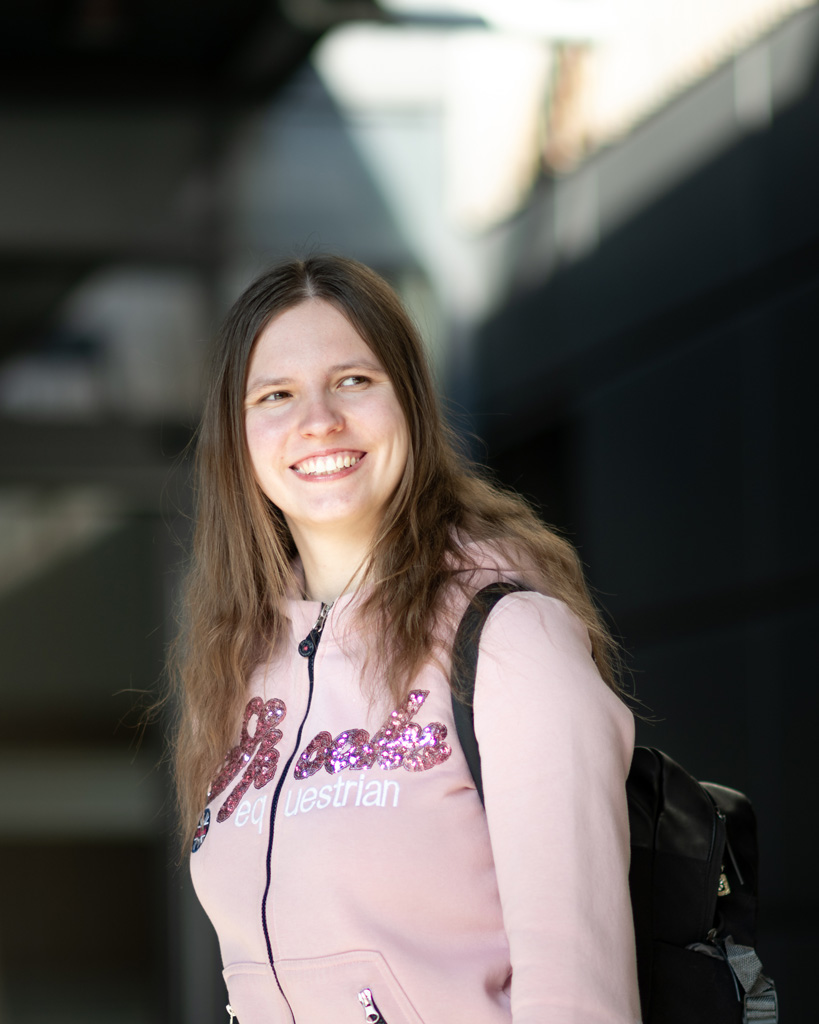
Jana Carolina Schumann
Where there’s a will, there’s a way – anyone can learn physics.
My studies
“Physics” as part of the Master’s programme at the Faculty of Physics at the University of Duisburg-Essen.
My defining moment at the UDE
When I went to the lecture theatre for the first time, I thought: ‘Wow, I’m actually studying physics at the University of Duisburg-Essen now. No longer as a pupil on the early-entry programme, but as a proper student. Now I can concentrate fully on my subject.’
Where to find me off campus:
In the stable with my horse, Carl.
Jana, how did you get into physics?
I was absolutely fascinated by physics even back at school. When I heard about the early-entry programme, I knew straight away: that’s what I want to do. From Year 11 onwards, I attended lectures at the UDE – and not just any lectures, but quantum mechanics straight away. I wanted to get properly involved and understand how things work.
What fascinates you most about your degree course?
Quantum physics is simply incredibly fascinating. In my Master’s thesis, I’m investigating spins in a magnetic field – you can think of it as a string of beads, where each bead is like an arrow pointing either up or down. I’m particularly drawn to fundamental research: understanding how systems react, what influences them and where disturbances arise.
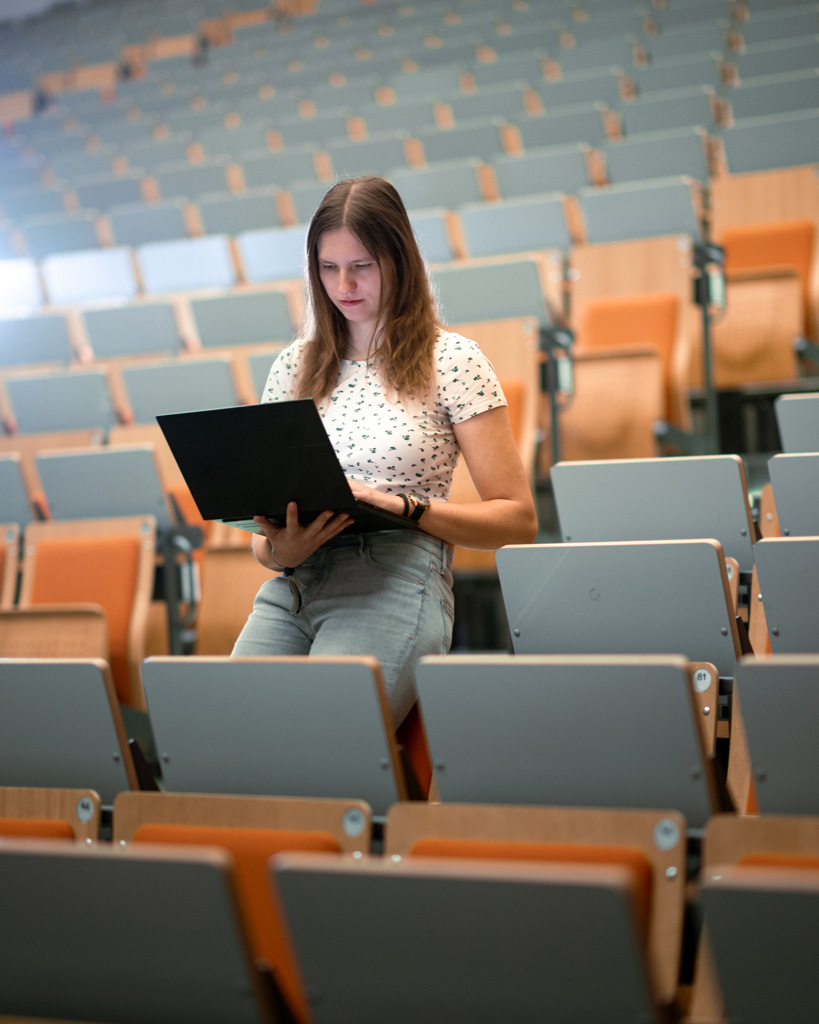
(Photo: Fabian Strauch)
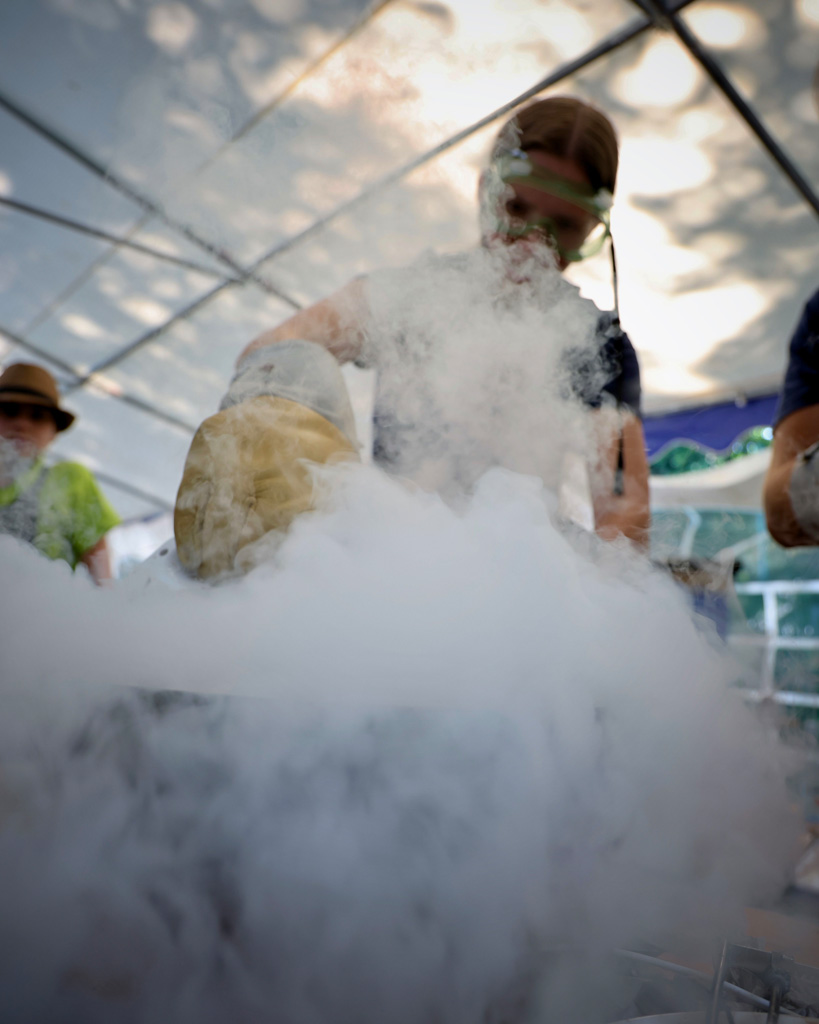
(Photo: Nicolas Wöhrl)
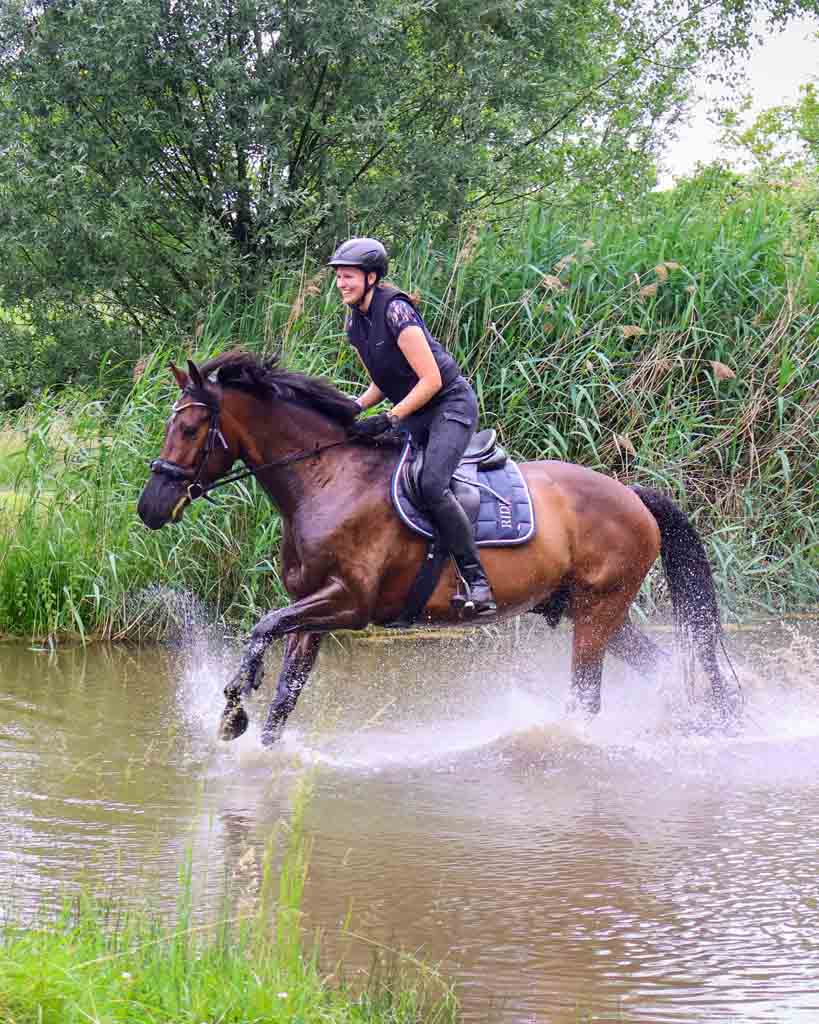
(Photo: private)
You’re involved as a tutor in the early-year programme, on the student representative council and with freestyle-physics. What motivates you to do this?
Quite simply: to share my enthusiasm. During the early study sessions, I help pupils with their questions and explain the lecture content – exactly what helped me back in the day.
I remember ‘Freestyle Physics’ from my own school days. These days, I supervise experiments, organise the programme and look after the Instagram account. Every year, I particularly look forward to the water rocket activities – the event always seems to take place during the hottest week of the year, so a bit of a cool-down is guaranteed. Above all, though, it’s great fun to see the pupils tinkering, experimenting and realising that physics can actually be really fun.
What advice would you give to pupils who are thinking about studying physics?
Just get on with it. If you’ve got the motivation, the time and a sense of fun, you can succeed in your degree. You don’t have to be brilliant at maths – the physics degree starts from scratch, and you grow into it step by step.
What are your plans after your Master’s degree?
I definitely want to do a PhD and play a particularly active role in teaching and science communication. That’s exactly what I enjoy most: explaining complex topics in an accessible way and inspiring others to take an interest in physics.
(The interview was conducted by Juliana Fischer in April 2026.)