
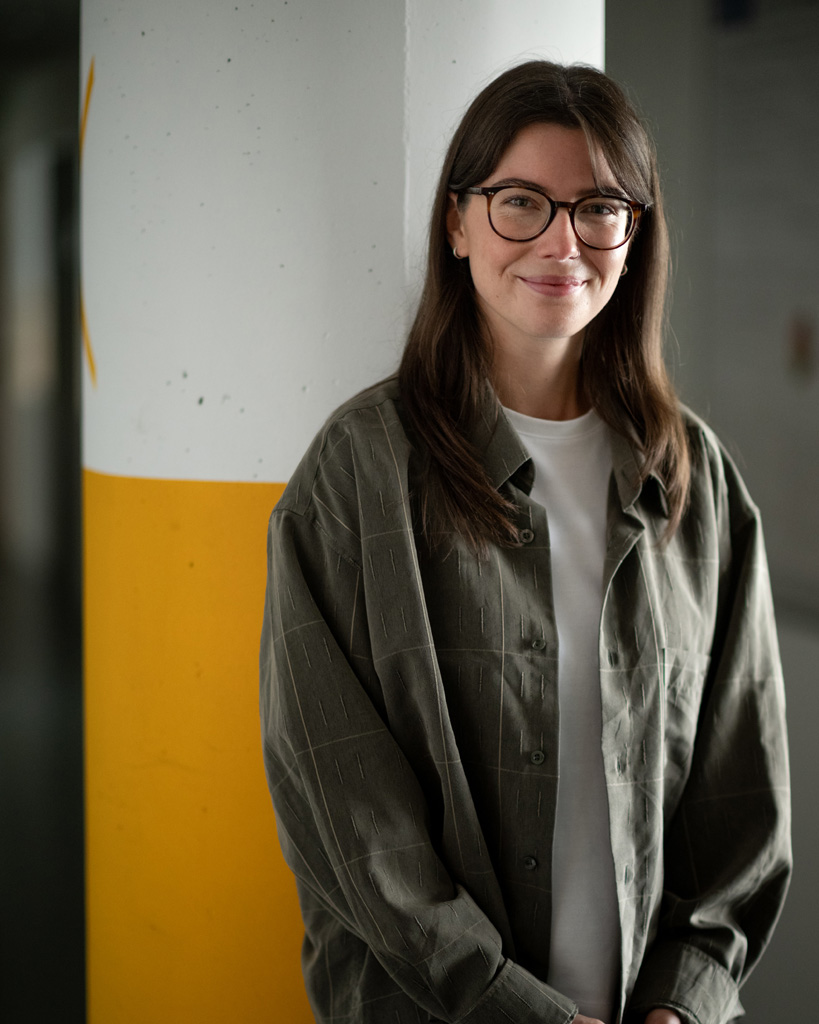
Anna Buthmann
Mathematics is just theoretical? Not if you take a closer look!
My studies
“Mathematics” (M.Sc.) at the Faculty of Mathematics, University of Duisburg-Essen.
That’s what I did before I started university
B.Sc. in Secondary School Teacher Education (Mathematics, Physics, and Educational Sciences) and B.Sc. in Mathematics with Physics as the applied subject.
Research or application?
For me, those are not mutually exclusive. I know lecturers who collaborate with companies, and working with real-world data allows mathematics to make a tangible impact.
You took a somewhat unconventional path in choosing your studies – from teacher education to a subject-specific degree. Why?
I first completed a bachelor’s degree in Mathematics and Physics for secondary school teaching and then added a subject-specific bachelor’s degree in Mathematics with Physics as my applied subject. The reason was quite simple: I became so fascinated by mathematics as a discipline and as a field of research.
What some people might find unappealing is exactly what attracts me. Of course, mathematics is theoretical, but I see it much more as a toolbox for making problems manageable. Mathematics allows me to build models and provide real answers. I’m particularly interested in numerical analysis and optimization. In my bachelor’s thesis, I solved a differential equation numerically. This kind of work can, for example, be used to describe materials with specific microstructures that are designed to achieve particular effects. That’s where I see a close connection to the equally exciting field of NanoEngineering.
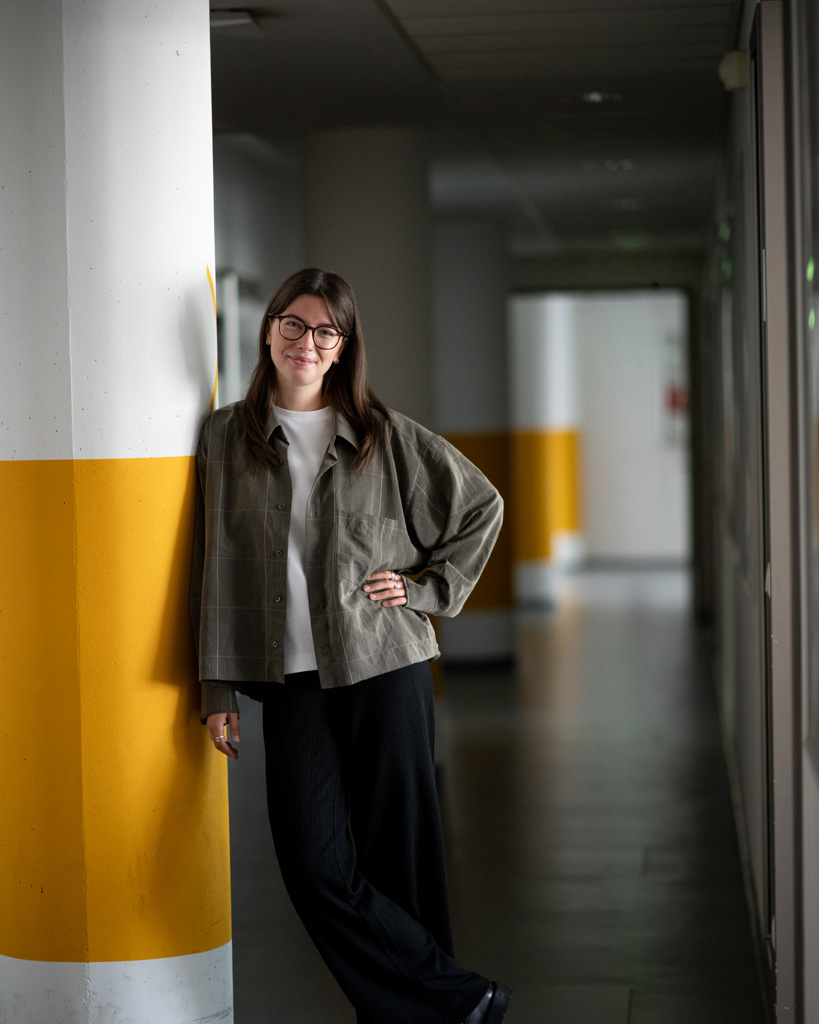
(Photo: Fabian Strauch)
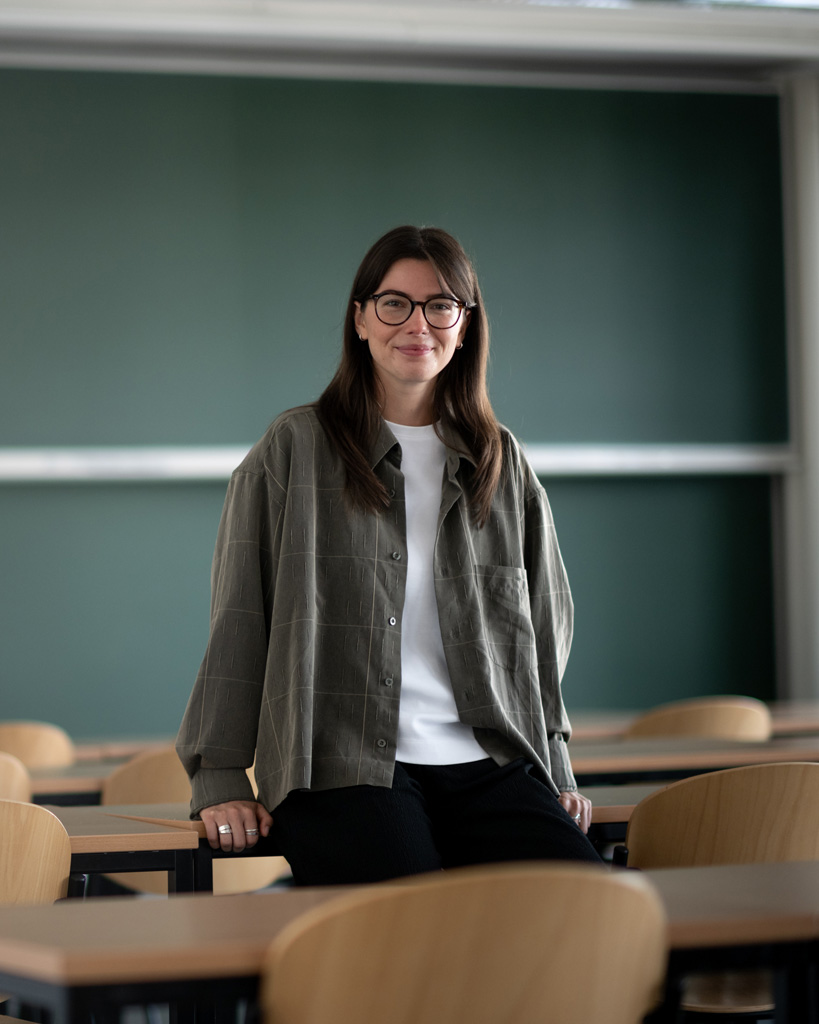
(Photo: Fabian Strauch)
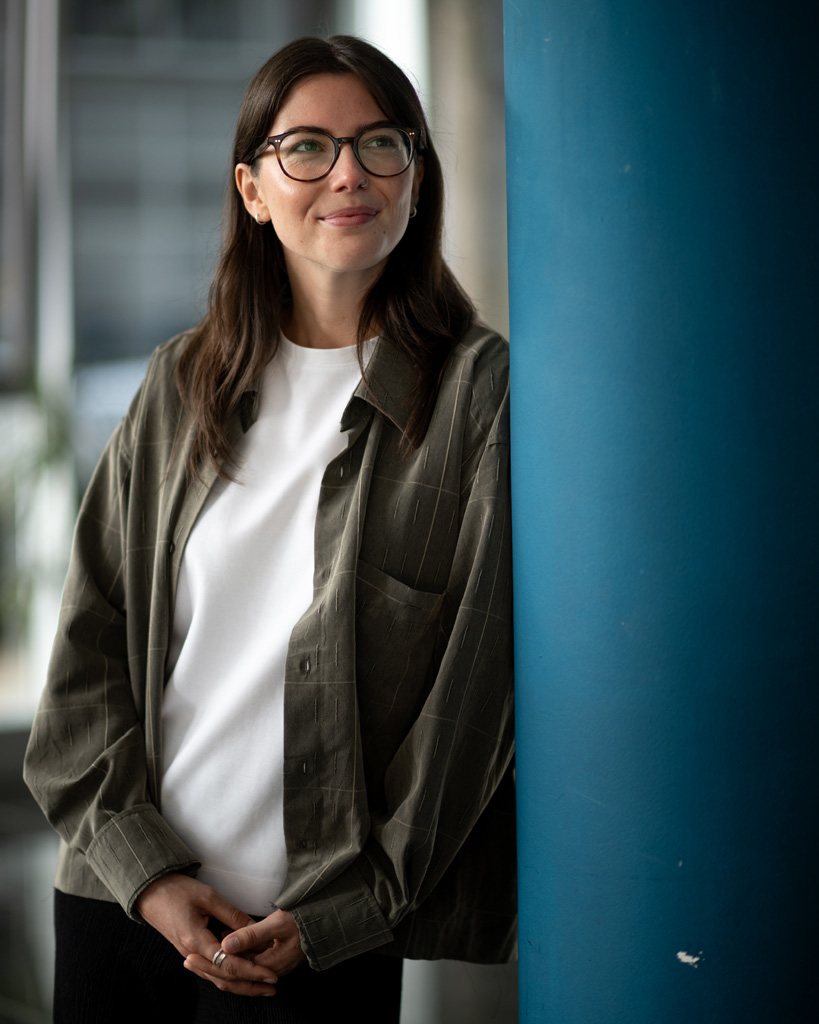
(Photo: Fabian Strauch)
Why do you feel at the right place in the Faculty of Mathematics?
Above all, because of the personal atmosphere and the support we receive. Professors and research staff genuinely care about our individual learning progress. I have even experienced situations where students were able to suggest topics, and those topics were then incorporated into the curriculum the following semester.
We also meet outside regular classes to present our current work and discuss it in a relaxed, collaborative atmosphere. Everything happens on equal footing. Just as I have benefited from informal mentoring by lecturers, I also try to pass on my knowledge. I have worked as both a tutor and teaching assistant, and I may even have helped several medical students overcome their anxiety about the physics lab course. It is also important to me, especially as a woman in mathematics, to be visible and to serve as a point of contact for fellow students and prospective students.
Was there a defining experience that shaped your career aspirations?
Yes. I served as the student representative on an appointment committee. These committees decide who will be appointed to a professorship within a faculty. As student representatives, we attended teaching demonstrations, research presentations, and the job interviews.
There are clear rules about which stakeholder groups have voting rights and how decisions are made. Even within that framework, however, I felt that our assessments and opinions were genuinely taken into account. Serving on the appointment committee made me seriously consider becoming a professor myself. At the same time, I am well aware of how demanding that career path is, so I deliberately keep my options open.
How do your scholarship and your connections with your sponsor support you?
I am a recipient of a UDE scholarship, and I am very proud of that. Recently, I attended a networking event for UDE scholarship holders in STEM subjects, where I had the opportunity to connect with professionals from industry. Encounters like these help me explore different career paths and discover what suits me best. Sustainability is a topic that’s very important to me, and I can easily imagine working for a company in that field. The applied nature of my „theoretical“ mathematics degree makes that possible.
(The Interview was conducted by Helene Gerhards in April 2026.)